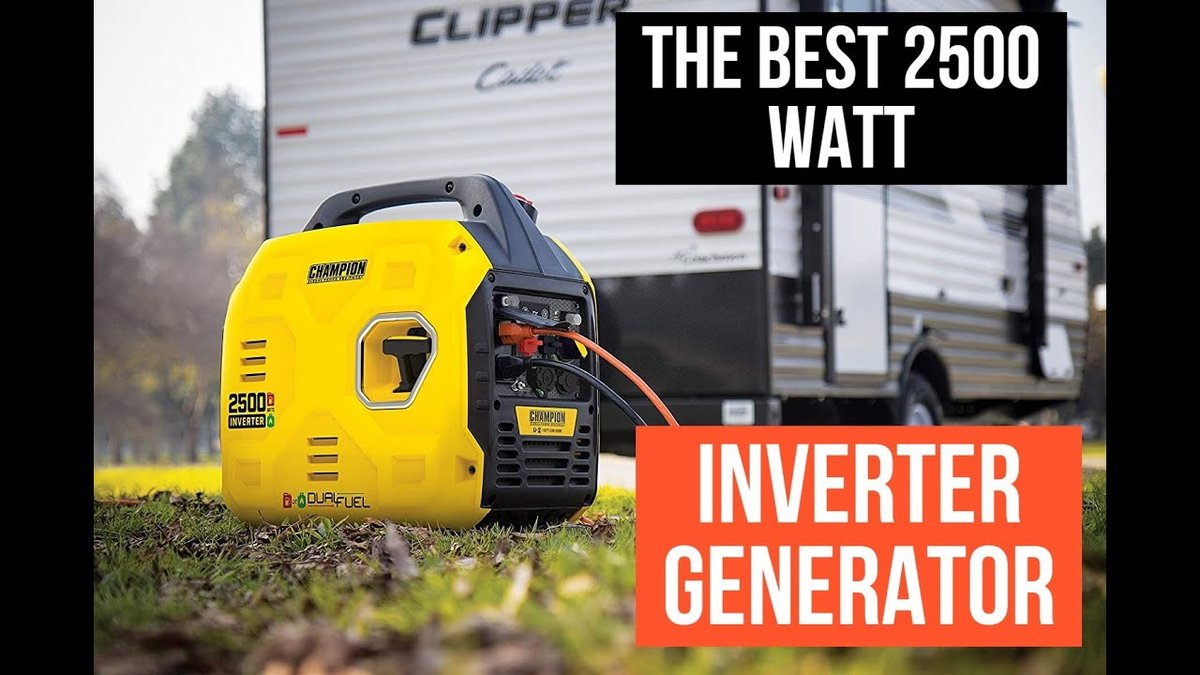
It's a common scenario: the lights flicker, the power goes out, or you're planning an off-grid adventure. Suddenly, the thought of reliable, portable electricity becomes paramount. But navigating the world of generators, particularly comparing 2500 Watt Generators with Other Power Solutions and Wattages, can feel like a complex puzzle. You need enough power for your essentials without overspending on an oversized, fuel-guzzling beast.
This guide is designed to cut through the noise, helping you understand if a 2500-watt generator is your sweet spot, or if a different wattage or power solution makes more sense for your specific needs. We’ll delve into the real-world performance, critical features, and best models, so you can make an informed decision with confidence.
At a Glance: What to Know About 2500-Watt Generators
- Versatile Power: A 2500W generator handles essentials like refrigerators, laptops, LED lights, and even small air conditioners.
- Starting vs. Running Watts: Pay attention to running watts – that's your continuous usable power, typically 1850-2200W for a 2500W unit.
- Quiet & Clean: Most modern 2500W models are inverter generators, offering quiet operation (around 50-60 dBA) and clean power safe for sensitive electronics.
- Portability: These units are generally compact and lighter, making them ideal for camping, tailgating, and light home backup.
- Fuel Efficiency: Expect 10-12 hours of run time at 25% load on a single gallon of gas, especially with eco-mode engaged.
- Parallel Power: Many can be linked with an identical unit to double the power output for heavier loads.
- Safety First: Look for features like CO sensors and low-oil shutoff for peace of mind.
Decoding Generator Jargon: Watts, Inverters, and Decibels
Before diving into specific models, let's clarify the essential terms that define a generator's capabilities and suitability. Understanding these concepts is crucial for making the right choice, whether you're eyeing a 2500-watt model or considering something different.
- Starting Watts (Surge Watts): Think of this as the initial "oomph" needed to kickstart motor-driven appliances like refrigerators, air conditioners, or power tools. This brief power spike can be 2-3 times higher than an appliance's normal operating power.
- Running Watts: This is your generator's continuous, steady power output once all your devices are up and running. A 2500-watt generator typically offers 1850 to 2200 running watts. This number is your true usable capacity, so always prioritize it when tallying up your power needs.
- Real-World Power Calculation: To figure out what size generator you need, list all the devices you plan to run simultaneously. Find their individual running wattages, then add them up. This sum should not exceed your generator's running watts. For any motor-driven items, you'll also need to ensure the generator's starting watts can handle that initial surge when they first kick on.
- Power Loss at Altitude: If you live or plan to use your generator in higher elevations, be aware that generators lose roughly 3% of their power for every 1,000 feet above sea level. This can impact your usable running watts.
- Inverter Technology: This is a game-changer for modern generators. Inverter models produce "clean power" with less than 3% Total Harmonic Distortion (THD). Why does this matter? It means the power is stable and consistent, just like what you get from a wall outlet, making it perfectly safe for sensitive electronics like laptops, smartphones, and medical equipment. Inverter generators achieve this by converting raw AC power to DC, then inverting it back to a perfectly stable 60Hz AC.
- Noise Levels: Measured in decibels (dBA) at 23 feet, generator noise can range from a quiet hum to a roaring drone. For context, 50 dBA is like a quiet conversation, while 70 dBA is closer to a vacuum cleaner. Remember, every 10 dBA increase doubles the perceived loudness. If you're camping or have close neighbors, lower dBA is paramount.
- Runtime and Fuel Efficiency: How long will your generator run on a tank of gas? For 2500W generators, the sweet spot is typically 10-12 hours at a 25% load (around 400-500 watts continuous). Many models feature an "ECO mode" which intelligently adjusts engine speed to match the load, significantly saving fuel and reducing noise. For example, a 1-gallon tank lasting 11 hours means you're burning approximately 0.09 gallons per hour.
- Parallel Capability: This nifty feature allows you to link two identical inverter generators together using a special parallel kit. The benefit? You effectively combine their power outputs. For instance, two 2500W units can deliver 4,000-4,500 watts, providing scalable power without the bulk of a single much larger generator.
- Safety Features: Modern generators come equipped with crucial safety mechanisms:
- CO Sensor: An integrated carbon monoxide sensor automatically shuts down the engine if dangerous levels of this odorless, colorless gas are detected. This is a life-saving feature.
- Low-Oil Shutoff: This protects your generator's engine from catastrophic damage by automatically stopping operation if the oil level drops too low.
- EPA and CARB Compliance: These certifications ensure your generator meets strict emissions standards. CARB compliance is specifically required for sale and use in California, but many reputable brands meet both for broader market reach. All the top recommended 2500W models mentioned in this guide are EPA and CARB certified for 2025 standards.
The Power Players: Recommended 2500-Watt Electric Generators
Not all 2500-watt generators are created equal. They vary in performance, features, and price. Here's a rundown of top contenders, highlighting their strengths:
- Westinghouse iGen2500: The Premium Performer
- Why it shines: This is often rated #1 by consumer reports (80/100) for a reason. It boasts the most powerful 2200 running watts in its class, offering significant headroom. It can even power a 13,500 BTU RV air conditioner alongside other devices simultaneously.
- Key Features: LED display for voltage, runtime, and fuel level. Expect premium build quality and reliability.
- Ideal for: Users who need maximum running watts in a portable package and prioritize top-tier performance and reputation.
- Champion 200951: The Lightweight & Quiet Champion
- Why it shines: At just 39 pounds, it's one of the lightest professional-grade units. It delivers 2500 starting watts and 1850 running watts at a remarkably quiet 53 decibels.
- Key Features: Features cold start technology, making it reliable in temperatures down to 10°F, and an economy mode for fuel efficiency.
- Ideal for: Cold weather use, those prioritizing extreme portability and quiet operation without breaking the bank.
- WEN 56250i: Incredible Value & Clean Power
- Why it shines: Offers incredible value for its price ($350-450) with 2500 surge watts and 1900 rated watts. Produces very clean power (<1.2% THD), making it extra safe for sensitive electronics.
- Key Features: Unique fuel shutoff feature helps prevent carburetor clogs during storage. Weighs a manageable 37.5 pounds.
- Ideal for: Budget-conscious buyers who still demand clean power, reliability, and smart storage features.
- PowerSmart PS5025: Efficiency & Parallel Prowess
- Why it shines: An efficiency champion with 2500 starting watts and 1900 running watts. Its 79cc OHV engine, combined with eco-mode, delivers excellent fuel economy.
- Key Features: Whisper-quiet operation, a 3-year warranty, and excellent parallel capability, allowing two units to generate up to 4000 watts.
- Ideal for: Users seeking a balance of efficiency, quietness, and the option to scale power later.
- AMERISUN 2500W: Safety & Modern Connectivity
- Why it shines: A mid-range priced option that prioritizes advanced safety.
- Key Features: Integrated CO sensor for peace of mind and 2025 EPA compliance. Offers versatile outlets: two 120V AC, one 12V DC, and two USB ports.
- Ideal for: Those who value comprehensive safety features and need diverse charging options for small electronics.
- Efurden 2500W: The Absolute Budget-Friendly Pick
- Why it shines: The most affordable option ($280-350) without skimping on essential modern features.
- Key Features: ECO mode, CO sensor, parallel capability, a 1.1-gallon fuel tank with a handy gauge, clean power (<3% THD), and even a Type-C outlet.
- Ideal for: Entry-level users or those with strict budgets who still want contemporary features.
- Oxseryn 2500W: Solid Budget with Comprehensive Ports
- Why it shines: Another solid budget-friendly option with a reliable 79.8cc 4-stroke OHV engine.
- Key Features: Comprehensive ports including two AC, one DC, one USB, and one Type-C. Also includes parallel function. Weighs 42 pounds.
- Ideal for: Shoppers seeking a dependable budget generator with robust connectivity.
Where a 2500-Watt Generator Shines: Real-World Applications
The beauty of a 2500-watt generator lies in its versatility. It hits a sweet spot for power output, portability, and fuel efficiency across various scenarios.
Home Backup Power: Keeping Essentials Running
When the grid goes down, a 2500W generator can be a lifesaver.
- What it powers: You can comfortably run a refrigerator, a few LED lights, charge your phones and laptops, and possibly a small space heater or fan. Prioritize running time and fuel efficiency to keep these essentials going for longer outages.
- Connection Tips: Always use heavy-duty extension cords (12-gauge minimum) for direct appliance connections. For a more integrated solution, consider a manual transfer switch, which must be installed by a licensed electrician. Crucially, never connect a generator directly to your home's electrical panel without a transfer switch (backfeeding) as this can be extremely dangerous for utility workers and your household.
RV and Camping: Comfort on the Go
For life on the road or under the stars, a 2500W unit is often the perfect companion.
- Key Considerations: Prioritize weight for easy transport and noise levels to keep the peace at campsites.
- RV ACs: Most RV air conditioners require 1,500-2,000 running watts, which a 2500W generator can typically handle, especially if equipped with a soft-start kit. For larger RVs or running multiple high-draw appliances, a parallel setup (two 2500W units linked) becomes incredibly useful.
Jobsite and Construction: Powering Your Projects
A 2500-watt generator is a valuable tool for various jobsite needs.
- Tool Power: It’s well-suited for corded power tools like circular saws, drills, and grinders, as well as work lights and battery chargers.
- Scalability: If your project demands more power occasionally, the parallel capability of many 2500W models allows you to scale up without needing to invest in a much larger, heavier single generator.
Tailgating and Outdoor Events: Entertainment Anywhere
For weekend fun, a quiet 2500W generator keeps the party going.
- Must-Have Features: Quiet operation (e.g., 53 dBA) is crucial for social settings. USB ports are a bonus for charging phones and speakers.
- What it powers: Think blenders for drinks, portable griddles, small TVs, sound systems, and charging stations.
2500 Watts Versus Other Power Options: Finding Your Perfect Match
The 2500-watt sweet spot isn't for everyone, but it’s a solid contender against both smaller and larger alternatives. Let's compare:
2500W vs. 2000W Generators: The Headroom Advantage
- 2000W generators: Typically offer around 1600 running watts. They are often lighter and slightly more portable.
- 2500W generators: Provide about 1900 running watts. This extra 300 watts offers significant headroom. For instance, while a 2000W unit might struggle to reliably start an RV AC without a soft-start kit, a 2500W unit often handles it with ease. That additional power means less worry about tripping breakers and more flexibility for adding another small appliance.
2500W vs. 3500W Generators: The Portability Trade-off
- 3500W generators: Offer substantially more running watts (often 2800-3000W), allowing for more appliances or heavier loads. However, this comes at a cost. They add significant weight (often 100+ pounds vs. 40 pounds for a 2500W), making them much harder to move. They're also generally noisier and consume more fuel.
- Choosing wisely: If maximum power isn't your absolute priority and portability is key, stick with a 2500W. If you need to run a whole house fan, a well pump, or multiple heavy-duty tools simultaneously, the 3500W might be necessary, but be prepared for the added bulk and noise.
Model Showdown: PowerSmart vs. Champion and Westinghouse vs. WEN
The generator market is competitive, and understanding the nuances between brands can guide your purchase.
- PowerSmart vs. Champion:
- PowerSmart PS5025: Often provides excellent value, delivering similar specifications to higher-priced models for less money. It's a strong contender for efficiency and quiet operation with parallel capability.
- Champion 200951: Excels in cold-weather performance with its patented cold start technology and is renowned for its quiet operation (53 dBA). Champion also has a reputation for strong customer service. If you live in a colder climate or absolute quietness is paramount, Champion might edge out PowerSmart.
- Westinghouse vs. WEN:
- Westinghouse iGen2500: The premium option. It stands out with the highest running watts (2200W) in the 2500W class and a strong reputation for reliability, as evidenced by its high Consumer Reports rating. It’s built for heavy use and demanding applications like RV ACs.
- WEN 56250i: Offers aggressive value, delivering excellent clean power (<1.2% THD) at a significantly lower price point. Its unique fuel shutoff feature is a practical bonus for long-term storage. If you want top-tier performance on a budget, WEN is a fantastic choice, especially if you appreciate clever engineering.
Keeping Your Power Humming: Maintenance & Troubleshooting
A generator is an investment, and like any engine, it needs proper care to ensure longevity and reliable performance. Explore 2500 watt electric generators to ensure you're getting a model that's built to last, but remember that the user's role in maintenance is just as important.
Initial Setup & Break-in
- First 10 Hours: During the first 10 hours of operation, your generator's engine parts are "breaking in." It's critical to drain and replace the factory break-in oil after this period. You'll notice the oil will likely be dark and contain fine metal particles – this is normal, but needs to be removed.
Oil Selection & Maintenance
- The Right Oil: Always use the manufacturer-specified oil, typically SAE 10W-30. Using the wrong oil can damage the engine.
- Check Before Every Use: Make it a habit to check the oil level before starting your generator.
- Regular Changes: Change the oil every 50 hours of operation or at least once per season, whichever comes first.
Fuel Management: The Lifeline of Your Generator
- Fresh is Best: Always use fresh gasoline. Stale fuel can gum up the carburetor and cause starting issues.
- Stabilizer & Ethanol-Free: Add a fuel stabilizer to your gas, especially if it will sit for more than a month. Even better, use ethanol-free gasoline if available, as ethanol can attract water and corrode fuel system components.
- Storage Strategy: For long-term storage (over a month), you have two options:
- Drain and Run Dry: Completely drain the fuel tank, then run the engine until it stops from lack of fuel. This ensures the carburetor is also dry.
- Full Tank with Stabilizer: Fill the tank completely with stabilized fuel to minimize air exposure and condensation.
Positioning & Ventilation: Safety Above All
- 20 Feet Rule: Position your generator at least 20 feet away from your home, windows, and any other buildings or vents.
- Downwind: Place it downwind from living areas to direct exhaust fumes away.
- Level, Dry Ground: Always operate on a level, dry surface. Protect it from rain or snow with a purpose-built generator cover, but ensure adequate airflow.
- Extension Cords: Use outdoor-rated, heavy-duty extension cords (12-gauge minimum for most generator use) and keep them as short as practical to minimize power loss.
Troubleshooting Common Generator Hiccups
Even the best generators can have an off day. Here’s how to tackle typical problems:
- Won't Start:
- Fuel First: The most common issue is stale or low fuel. Ensure you have fresh gas.
- Spark Plug: Inspect or replace the spark plug annually.
- Oil Level: Confirm the oil level is correct; low-oil shutoff prevents starting.
- Choke Position: Make sure the choke is in the correct position for starting.
- Engine Runs But No Power Output:
- Circuit Breaker: Check and reset the generator's circuit breaker (or individual receptacle breakers).
- Receptacles: Inspect the power outlets for any damage.
- Professional Service: If these don't work, it could indicate issues with brushes or the Automatic Voltage Regulator (AVR), which may require professional service.
- Surging or Unstable Power:
- Governor Adjustment: Consult your manual for instructions on adjusting the governor.
- Dirty Carburetor: Old, stale fuel is a common culprit for a dirty carburetor, which can cause surging. A carburetor cleaning might be needed.
- Manage Loads: Try turning on heavy loads one at a time, allowing the generator to stabilize between each.
Ownership Costs: Beyond the Sticker Price
Remember that the purchase price is just the beginning. Factor in:
- Fuel: This will be your ongoing largest expense.
- Oil and Filters: Regular maintenance costs.
- Spark Plugs: An inexpensive but vital replacement item.
- Repairs: While quality generators are robust, parts can wear out over time.
- Storage: Secure, appropriate storage.
With proper maintenance, quality generators can retain 40-60% of their value after three years.
Off-Season Storage: Preparing for the Long Haul
When your generator isn't needed for an extended period, proper storage prevents issues:
- Engine Prep:
- Add fuel stabilizer to a full tank of fresh fuel and run the generator for 5 minutes to circulate it.
- Change the oil.
- Remove the spark plug, add a tablespoon of fresh oil through the hole, pull the starter cord 2-3 times (to distribute the oil and lubricate the cylinder), then reinstall the plug.
- Exterior Care: Clean the generator, ensure it's dry, touch up any paint chips to prevent rust, and cover it with a breathable fabric to protect it from dust and moisture.
- Storage Location: Store it in a dry, temperature-stable area like a garage. Never store or operate a generator in a basement due to ventilation needs and carbon monoxide risks.
Your Next Steps: Powering Up with Confidence
Choosing the right generator means understanding your needs, the technology available, and the practicalities of ownership. A 2500-watt inverter generator offers an outstanding blend of portability, clean power, and sufficient output for many critical applications, from emergency home backup to comfortable camping.
Consider these final recommendations:
- Overall Best: For sheer power, premium features, and reliability, the Westinghouse iGen2500 stands out with its 2200 running watts and robust build.
- Budget-Conscious Excellence: If you're looking for an exceptional balance of quiet operation, cold-start reliability, and portability without a premium price tag, the Champion 200951 is your top pick.
- Absolute Rock-Bottom Pricing: For essential modern features like CO sensors and Type-C outlets at an unbeatable price point, the Efurden 2500W delivers impressive value.
Regardless of your choice, remember that proper maintenance – consistent oil changes, fresh fuel, and correct storage – is the secret ingredient to extending your generator's lifespan and ensuring it's always ready when you need it most. Power up responsibly, and enjoy the peace of mind that comes with reliable electricity.