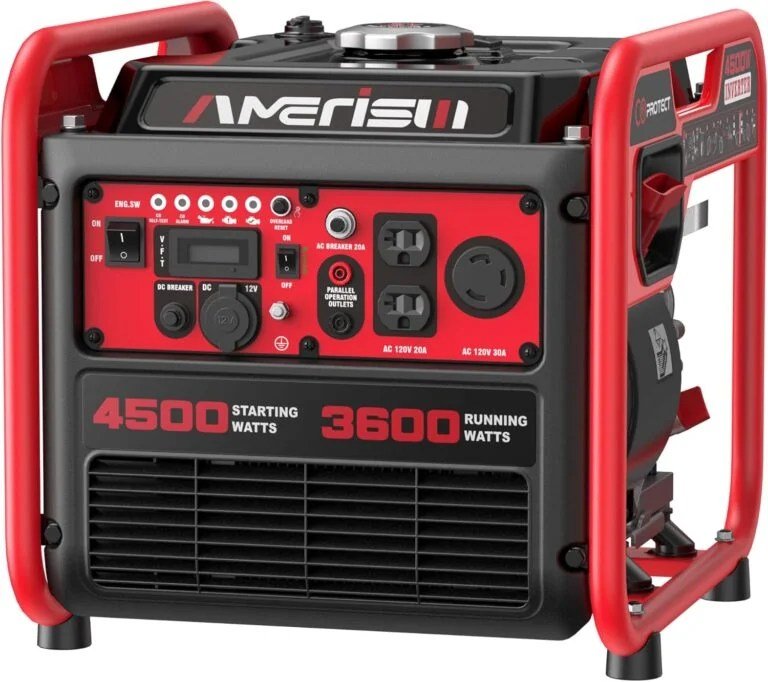
When the lights go out or you need reliable power off-grid, your 2500-watt portable generator stands ready as a true workhorse. It’s perfect for keeping essentials running—think a refrigerator, some lights, a phone charger, or even a few power tools. But to truly unlock its potential, enhance its safety, and extend its lifespan, you need more than just the generator itself. Equipping it with the right essential accessories and upgrades for 2500 watt generators is crucial.
This isn't about unnecessary gadgets; it's about making your generator easier to use, safer to operate, and more resilient in tough conditions. From basic mobility aids to advanced electrical safeguards, a smart investment in accessories transforms your generator from a simple power source into a dependable, versatile part of your emergency preparedness or outdoor toolkit.
At a Glance: Key Takeaways for Your 2500W Generator Accessories
- Safety First: Always prioritize manufacturer-recommended accessories to ensure compatibility and protect your warranty.
- Mobility Matters: Wheel kits are often essential for moving generators over 100 lbs; lifting kits for specialized transport.
- Electrical Essentials: Heavy-duty extension cords and appropriate adapters are non-negotiable. Transfer switches are vital for home backup.
- Maintenance Extends Life: Hour meters, fuel stabilizers, and magnetic oil dipsticks keep your engine healthy.
- Protect Your Investment: Storage and storm covers shield your generator from the elements.
- Avoid Risky Mods: Be wary of third-party modifications like fuel conversion kits or exhaust extensions, as they can void warranties and pose serious safety risks.
Why Your 2500-Watt Generator Needs More Than Just Fuel
A 2500-watt generator is a versatile machine, capable of powering a surprising array of appliances. It can comfortably run your refrigerator, a few lights, a coffee maker, or even a small window air conditioner. You can use it for essential home backup during outages or as a reliable power source for camping and job sites. However, without the right accessories, you might find yourself limited by cord length, struggling with mobility, or even compromising safety.
Think of it like buying a car without tires or a house without a roof. The core product is great, but its full utility and longevity depend on key additions. These aren't just "nice-to-haves"; many are critical for safe operation, proper maintenance, and maximizing your generator's inherent capabilities. Before diving into specific items, remember this golden rule: always prioritize official, manufacturer-supplied and recommended accessories. This ensures compatibility, optimal performance, and, most importantly, maintains your warranty. Third-party accessories, while sometimes cheaper, often carry inherent risks that could lead to safety issues, poor performance, or even void your warranty.
Getting Around: Enhancing Your Generator’s Mobility
Even a compact 2500-watt generator can be heavy and cumbersome. Dragging it across your yard or lifting it into a truck is a recipe for back strain. Mobility accessories make moving your generator significantly easier and safer.
Wheel Kits: Your Generator's Best Friend for Easy Transport
For most portable generators, especially those over 110 lbs, a wheel kit is an absolute must-have. These kits typically include 2-4 wheels and often a folding handle, transforming a stationary power brick into a cart-like device you can simply roll. Imagine trying to move a 120-pound generator from your garage to the back of your house without wheels – it’s a pain! With a wheel kit, it becomes a simple task, allowing you to easily reposition your generator to meet the crucial 20-foot distance safety requirement from your home.
- Cost: Generally between $30-$150.
- What to look for: Durable wheels (solid rubber or pneumatic), a sturdy frame, and an ergonomic handle. Ensure it’s compatible with your specific generator model.
Lifting and Hanger Kits: For When Up is the Only Way
Less common for the average homeowner but critical for specific applications, lifting kits or hanger kits are designed for vertical mobility. These usually consist of steel crossbars that bolt securely to your generator's frame, allowing it to be safely lifted by a crane or hoist. If your generator needs to be moved onto a raised platform, a boat, or a work truck via mechanical means, these kits are essential.
- Cost: Typically $20-$50.
- Consideration: Primarily for commercial or specialized recreational use where crane transport is anticipated. Most home users won't need these.
Powering Up Safely: Electrical Adapters and Extension Cords
Once you’ve got your generator positioned, you need to get the power where it needs to go. This is where electrical accessories become critical.
Adapters: Bridging the Outlet Gap
Generators often come with various outlet types, and sometimes, the appliance you want to power has a different plug. Adapters solve this incompatibility. For instance, if you're looking to power your RV directly from your generator, you might need an L5-30P to TT-30R adapter. Similarly, a heavy-duty L14-30P to 14-50R adapter could be crucial for larger RVs or specific tools.
- Cost: Around $20.
- Key Tip: Always match the adapter to the specific outlet and plug types you need. Don't force incompatible plugs.
Extension Cords: The Lifeline to Your Appliances
Perhaps the most universally essential accessory, heavy-duty extension cords extend your generator’s reach from 2 to 100 feet. For a 2500-watt generator, you’ll want cords that can handle the load without overheating or causing voltage drop. This means opting for 10- to 12-gauge cords. Using thinner, lower-gauge cords can lead to power loss, damage to your appliances, or even fire hazards.
Remember that crucial safety distance: your generator must operate at least 20 feet from your home, windows, and doors to prevent dangerous carbon monoxide buildup. A good quality, sufficiently long extension cord makes this possible. For more insights on picking the right cord for your setup, consider our guide on selecting generator extension cords.
- Cost: $50-$200, depending on length and gauge.
- Recommendation: Always buy the heaviest gauge cord you can afford, considering the length you need. Avoid daisy-chaining multiple cords.
Specialized Electrical Accessories: Beyond the Basics
For those looking to integrate their generator more deeply into their home's power system or optimize its electrical output, certain specialized accessories are invaluable.
Bonding Plugs (Edison Plugs): Solving "Floating Neutral" Issues
Some sensitive electronic devices or certain electrical protection products require a neutral-to-ground bond, which many portable generators (designed as "floating neutral" for safety when powering individual tools) do not provide by default. A bonding plug creates this bond, resolving potential "open ground" fault codes and ensuring proper operation for these specific applications. This is typically for advanced users with a clear understanding of their electrical setup.
- Cost: Less than $20.
- Consideration: Only use if you understand why it's needed for your specific situation. Incorrect use can be dangerous.
Parallel Kits: Doubling Your Inverter Power (If You Have Two Generators)
While a 2500-watt generator is excellent on its own, if you own two compatible inverter generators, a parallel kit can combine their output. This allows you to almost double your available wattage for short bursts or to run more appliances simultaneously. These kits come as simple cables or small boxes and are specific to certain inverter generator models. Crucially, the maximum power output is limited by the kit itself, not always purely additive.
- Cost: $50-$100.
- Important: This accessory is only for inverter generators designed for parallel operation. Your standard open-frame 2500-watt generator likely won't be compatible.
Transfer Switches: Safely Powering Your Home
If your goal is to power essential circuits in your home with your 2500-watt generator, a transfer switch is not just an accessory; it’s a legal and safety imperative. It safely connects your portable generator to your household electrical panel, allowing you to select which circuits receive generator power. More importantly, it prevents dangerous and illegal "backfeeding" of electricity into the utility grid, which can electrocute utility workers. Manual transfer switches require you to manually switch between utility and generator power. Most portable generators, including 2500W models, do not support automatic startup with Automatic Transfer Switches (ATS). For anyone considering using their generator as home backup, this is essential. Explore more about how to safely power your home with a generator using these crucial devices.
- Cost: Several hundred dollars (excluding installation).
- Professional Installation: Always have a qualified electrician install a transfer switch.
Keeping It Running: Performance and Maintenance Accessories
Even the most reliable generator needs regular attention. These accessories help you monitor its health and adhere to critical maintenance schedules.
Clamp Meters: Your Generator’s Health Monitor
A clamp meter (also known as a voltmeter or current tester) is a highly recommended tool, especially if your generator lacks a built-in data center. It allows you to safely measure your generator's output (amps, voltage, wattage) at the sockets and also the power consumption of individual appliances. This is incredibly useful for understanding your load, ensuring you don't overload your 2500-watt generator, and accurately determining the starting and running watts of your devices for future generator sizing.
- Cost: Around $50.
- Benefit: Prevents overloads, helps you balance your power usage, and provides valuable diagnostic information.
Vibration-Activated Hour Meters: Tracking Engine Life
Like any engine, your generator needs regular maintenance—oil changes, air filter cleaning, spark plug checks. But how do you know when it's time? A vibration-activated hour meter tracks your engine's runtime, allowing you to follow the manufacturer's maintenance schedule precisely. Many generators don’t come with this feature, making it a must-have for proactive owners.
- Cost: About $15.
- Importance: Ensures timely maintenance, extending the life and reliability of your generator.
Fuel Stabilizers: The Secret to Long-Term Storage
Generators, especially those used occasionally, often sit with fuel in their tanks for extended periods. Modern gasoline can degrade, form gum, and clog carburetors, leading to hard starts or engine damage. Fuel stabilizers prevent this by protecting the carburetor and fuel lines, making your generator ready to go when you need it most. Always use it if you're not draining the fuel after use or for long-term storage.
- Benefit: Prevents costly carburetor issues and ensures reliable starting.
Magnetic Oil Dipsticks: Simple Engine Protection
Small engines, like those in 2500-watt generators, often don't have oil filters. A magnetic oil dipstick is a simple, inexpensive upgrade that extracts microscopic metal shavings from the oil, significantly reducing engine wear. Ensure you check for compatibility, as different generators have different thread sizes.
- Cost: $15-$20.
- Recommendation: Highly recommended for any small engine without an oil filter.
Maintenance Kits: All-in-One Convenience
For first-time buyers or those who prefer convenience, generator-specific maintenance kits are available. These comprehensive kits typically include essential items like air filters, spark plugs, a bottle of oil, and sometimes cleaning equipment. While they might be slightly more expensive than buying individual components, they offer a hassle-free way to ensure you have everything you need for routine servicing. For comprehensive advice on keeping your generator in top shape, check out our generator maintenance tips.
- Benefit: Convenient and ensures you have the correct parts for your model.
Protecting Your Investment: Environmental and Storage Accessories
Your generator works hard in tough conditions. Protecting it from dust, rain, and extreme temperatures is crucial for its longevity and performance.
Storage Covers: Keeping Dust and Debris Out
When your generator isn't in use, a storage cover protects it from dust, dirt, and minor impacts. Model-specific covers offer the best fit and protection. These are primarily for storage and cannot be used during operation.
- Cost: $10-$30.
- Usage: For long-term storage in a garage or shed.
Storm Covers (Running Covers): Powering Through Inclement Weather
If you need to operate your generator during rain, snow, or other inclement weather, a storm cover (also known as a running cover or generator tent) is indispensable. These heavy-duty, waterproof or water-resistant covers feature a sturdy backbone that creates a sheltered operating environment. Brands like Champion Power Equipment and Westinghouse offer excellent options. This allows you to safely keep your generator running outdoors, maintaining that critical 20-foot distance from your home without exposing the electrical components to moisture.
- Cost: $150-$200.
- Recommendation: Highly recommended for emergency backup situations where you might need power during a storm.
Cold Weather Kits: Beating the Freeze
In freezing temperatures, water condensation can form and freeze in your generator's crankcase breather tube. This can lead to increased pressure, oil leaks, and potentially engine damage. Cold weather kits are designed to prevent this by warming the breather tube or other critical components.
- Cost: $100-$300.
- Recommendation: Essential if you anticipate operating your generator in consistently sub-freezing conditions.
Altitude Kits: Breathing Easier at High Elevations
If you live or frequently operate your generator above 2,000 feet, the thinner air can cause your generator to run rich (too much fuel for the available oxygen), leading to reduced power and increased fuel consumption. Altitude kits consist of different carburetor jets that adjust the fuel flow for optimal performance at higher elevations. However, note that modifying the carburetor may void your warranty, so always check with the manufacturer first.
- Cost: A few dollars for the jets.
- Consideration: Necessary for consistent high-altitude operation, but be aware of warranty implications.
What to Avoid: Dangerous or Warranty-Voiding Modifications
While the desire to customize or "improve" a generator is understandable, some modifications are dangerous, detrimental to performance, or will void your warranty. It's crucial to understand these pitfalls.
Remote Start Kits (Third-Party): Risky Business
Generators with electric start are sometimes targets for third-party remote start kits. While convenient, these aftermarket kits are often expensive ($200-$500, plus installation) and can void your warranty unless they are specifically sanctioned or offered by the manufacturer. If remote starting is a key feature for you, consider purchasing a generator that has it built-in from the factory.
Fuel Conversion Kits: Not Worth the Risk
Converting your generator to run on alternative fuels (like propane or natural gas if it's not a dual-fuel model) using third-party kits is strongly discouraged. These modifications invariably void your warranty and emission certifications. They can also reduce performance, cause long-term engine damage, and are not recommended by manufacturers. If you want multi-fuel capability, buy a generator designed for it.
Silencers/Mufflers (Aftermarket): Performance Killer
Attempting to reduce your generator's noise by modifying its exhaust system with aftermarket silencers or mufflers can restrict or block exhaust flow. This leads to backpressure, engine overheating, reduced performance, and will void your warranty. If noise is a primary concern, invest in a quiet inverter generator from the start.
Exhaust Extensions: A Deadly Illusion
This cannot be stressed enough: Exhaust extensions are extremely dangerous and are strongly discouraged. They provide a false sense of security. Never, under any circumstances, run a generator indoors, in a garage, basement, or any enclosed or partially enclosed space. Exhaust extensions do not prevent carbon monoxide poisoning, which is an odorless, colorless gas that can be fatal in minutes. Your generator must always be operated outdoors in a well-ventilated area, at least 20 feet away from windows, doors, and vents. For more critical safety information, please review our guide on generator safety.
Common Questions About 2500W Generator Accessories
Can a 2500-watt generator power my whole house?
No. A 2500W generator cannot power an entire home. It's designed to support essential appliances and specific circuits, not high-demand systems like central air conditioning, electric water heaters, or an entire household's load simultaneously. It's ideal for a refrigerator, lights, phone chargers, and perhaps a small microwave or a window AC unit, but you must carefully manage the total running wattage to stay under 2500W.
Are third-party accessories always bad?
Not always, but they carry inherent risks. Manufacturer-recommended accessories are tested for compatibility, safety, and performance with your specific generator model. Third-party options might not meet these standards and can potentially void your warranty, cause performance issues, or even pose safety hazards. When in doubt, stick with official accessories.
How do I know what size extension cord to buy for my 2500W generator?
For a 2500W generator, you should use heavy-duty extension cords with a wire gauge of 10 or 12. The longer the cord, the heavier (lower number) the gauge needs to be to prevent voltage drop and overheating. For instance, a 100-foot cord should ideally be 10-gauge.
Is it okay to run my generator in the rain if I have a storm cover?
Yes, a storm cover (or running cover) is specifically designed to allow safe operation of your generator in rain or light snow. It protects the electrical components from moisture while ensuring proper ventilation for the engine and exhaust. Always ensure the cover is properly installed and doesn't restrict airflow.
How often should I perform maintenance on my generator?
Refer to your generator's owner's manual for the exact maintenance schedule. Generally, the first oil change is recommended after 5-20 hours of initial use ("break-in"), and subsequent oil changes every 50-100 hours or annually. Air filters, spark plugs, and fuel filters also have recommended replacement intervals. An hour meter helps you track this precisely.
Maximizing Your Generator’s Potential: Final Thoughts
Outfitting your 2500-watt generator with the right accessories isn't just about adding features; it's about investing in peace of mind, safety, and the longevity of your equipment. Whether it's the simplicity of a wheel kit that saves your back or the critical safety of a transfer switch, each accessory plays a role in making your generator experience better.
Always prioritize safety, adhere to manufacturer recommendations, and never compromise on essential items like heavy-duty extension cords or proper covers. A well-equipped and well-maintained generator is a reliable generator, ready to serve you faithfully whenever and wherever power is needed. For a deeper dive into generator models and their specific features, you might find our 2500-watt electric generator guide incredibly helpful.